Hornsea Pottery – A British Design Classic
At The Vintage Window in Scarborough, we are always looking to buy Hornsea Pottery and usually have a varied selection in stock. It remains one of the most recognisable and collectable names in post-war British ceramics.
Origins of Hornsea Pottery
Hornsea Pottery was founded in 1949 in Hornsea, East Yorkshire, by Colin Rawson and Desmond Townsend.
The company began modestly, initially producing small souvenir items for the seaside trade. However, it quickly developed into a serious ceramics manufacturer, combining modern design with affordability — something that became central to its success.
By the mid-1950s, Hornsea had outgrown its original premises and expanded production significantly. In 1957, a new factory opened in Bridlington, enabling large-scale manufacture and national distribution.
Hornsea became one of the most important British pottery manufacturers of the post-war period.
Hornsea Pottery Through the Decades
1950s – Growth and Expansion
The 1950s saw Hornsea move into tableware production. Durable, affordable earthenware made the company popular with ordinary households during a time when Britain was rebuilding and modernising.
Their success was built on combining practical function with contemporary design.
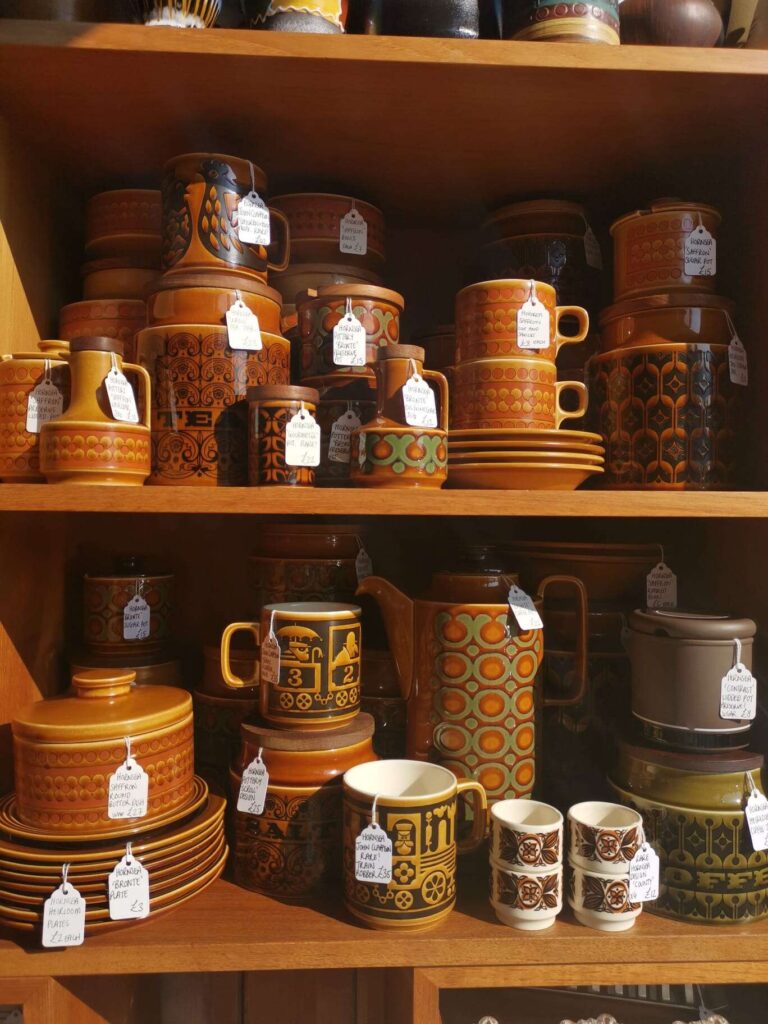
1960s – Design Innovation
The 1960s marked Hornsea’s golden era.
In 1962, designer John Clappison joined the company and became one of its most influential creative forces. His bold, modern designs aligned perfectly with the spirit of the decade.
Notable achievements during this period include:
1966 World Cup commemorative ware
The launch of several iconic tableware ranges
Strong export growth
Hornsea was no longer just a regional pottery — it was internationally recognised.
John Clappison – The Designer Behind the Iconic Ranges
John Clappison (born 1937, Doncaster) trained in ceramics and worked for several pottery firms before joining Hornsea in 1962.
During the 1960s and 70s he designed some of the company’s most celebrated ranges, including:
Saffron (1970)
One of Hornsea’s most famous patterns, featuring bold stylised floral motifs in rich mustard tones. It became a defining look of 1970s British kitchens.
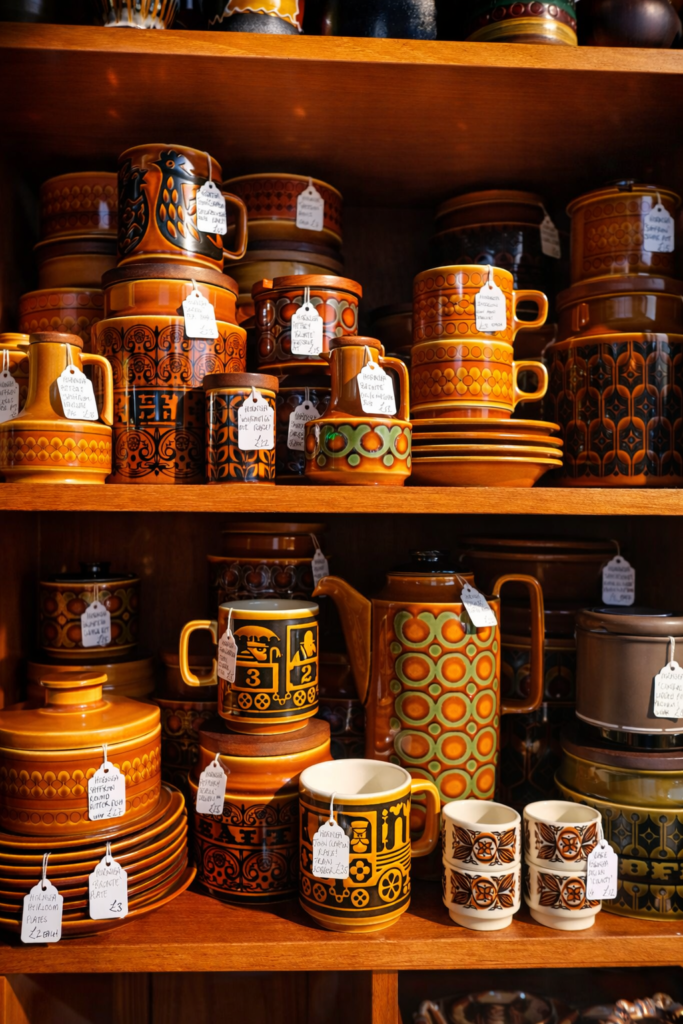
Heirloom (1966)
Available in several colourways (Brown, Green, Blue), Heirloom featured repeating symmetrical motifs and became one of Hornsea’s best-selling designs.
Brontë (1972)
A darker, more dramatic pattern reflecting the earthy tones popular in 1970s interiors.
Clappison’s work helped elevate Hornsea from a functional pottery manufacturer to a serious design name.
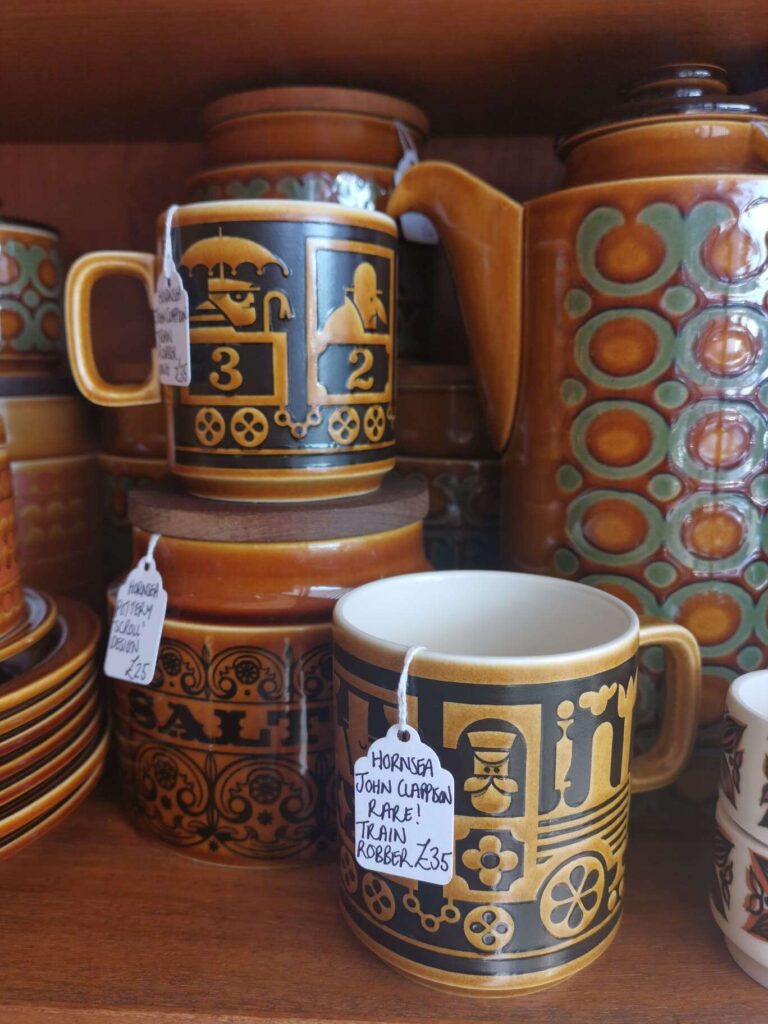
Rare and Collectable Hornsea Ranges
Beyond the core tableware lines, collectors seek out:
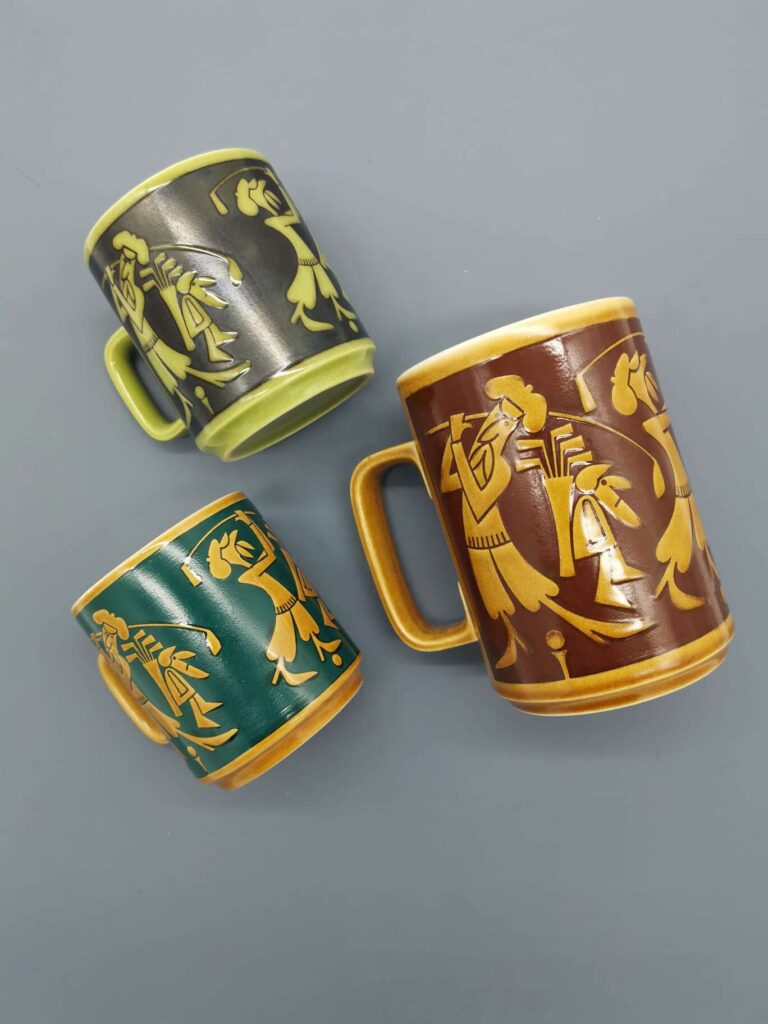
Fauna range (1960s)
Safari motifs
Windmill series
Limited commemorative mugs
Early souvenir ware
Condition, completeness of sets, and colour variation all influence value.
Why People Collect Hornsea Pottery
Collectors are drawn to Hornsea for several reasons:
Design – Strong mid-century and 1970s aesthetics
Nostalgia – Many grew up with it in family kitchens
Investment potential – Some rare pieces have steadily risen in value
British design heritage – It represents an important era of UK manufacturing
For many, it is both decorative and deeply personal.
The Closure of Hornsea Pottery
Despite decades of success, increasing foreign competition and changing consumer tastes affected British manufacturing in the 1980s and 1990s.
Hornsea Pottery went into receivership in 1988. Production continued under new ownership for a period, but the original factory eventually closed in 2000.
Although production ceased, collector demand has never disappeared.
Buying and Selling Hornsea Pottery
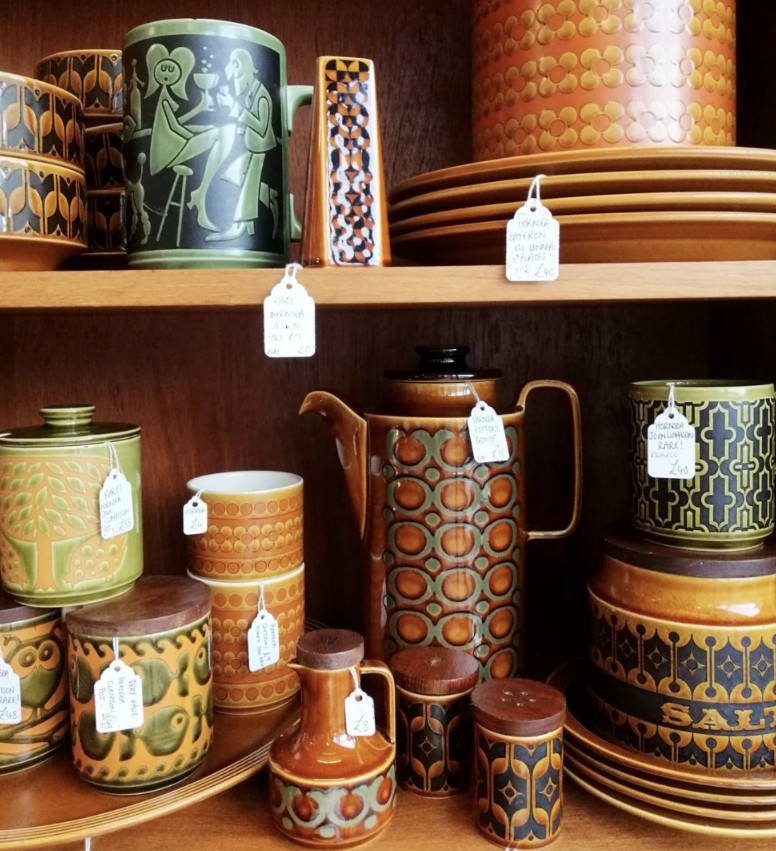
Hornsea remains highly collectable today. Complete tea sets, storage jars, and unusual colourways are particularly desirable.
If you are looking to sell Hornsea Pottery, we are always interested in buying.
And if you are looking to add to your collection, you may find something waiting for you in our Scarborough shop.